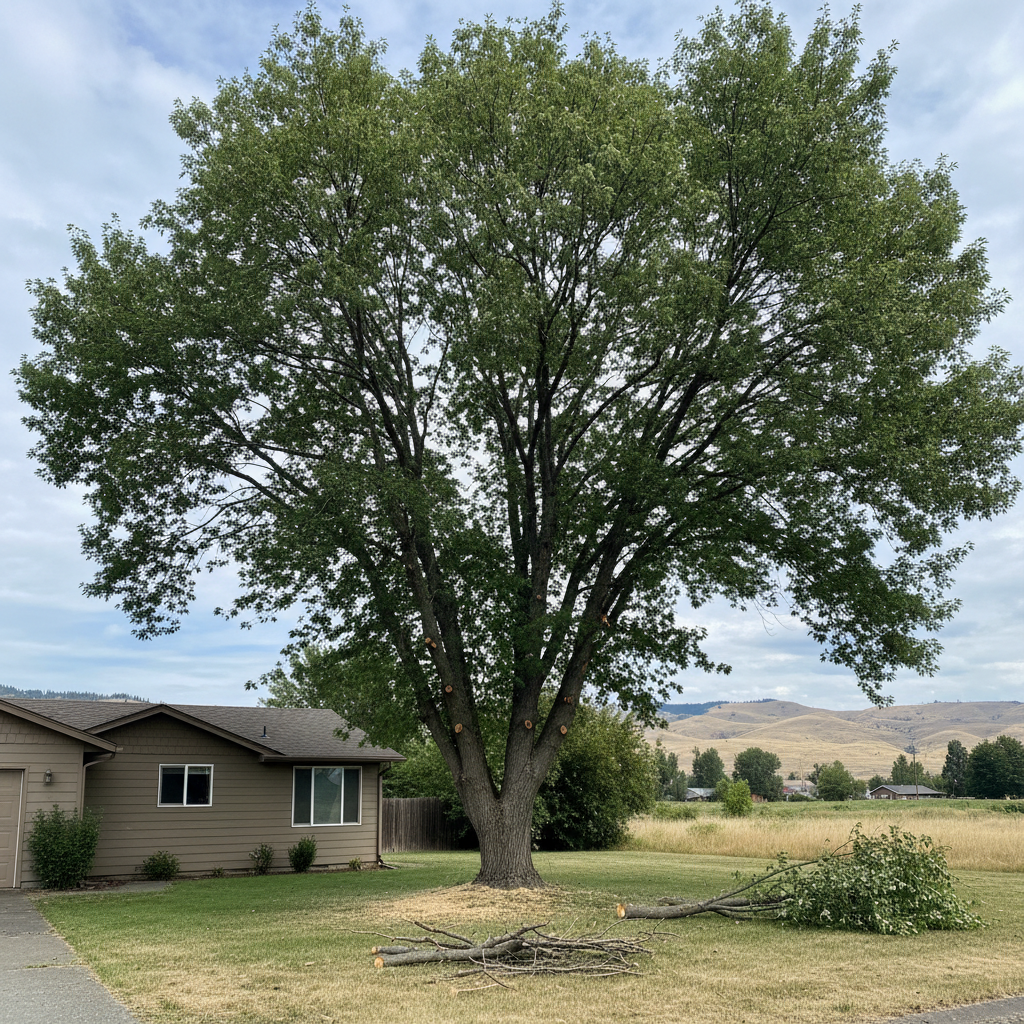
You've got trees, right? And, let's be honest, at some point they're going to need a trim. That's just how it goes when you own property, especially around here in Union Gap where we get some serious wind and snow. But I've noticed a lot of folks in our area make some pretty common—and sometimes quite expensive—mistakes when it comes to getting their trees pruned. So, let's chat about what to watch out for. That way, you won't end up kicking yourself later.
Mistake #1: Hiring the Cheapest Bid
Okay, this is probably the biggest one. Look, everyone wants to save a buck, I totally get that. But with tree work, the cheapest bid often means someone's cutting corners, both literally and figuratively. You might find a guy with just a pickup truck and a chainsaw offering a super low price. What you won't get from him, though, is insurance, proper training, or the right equipment. And if that guy falls off a ladder and breaks his leg on your property, guess who's on the hook? That would be you. Or if he drops a branch right through your roof, he's probably not insured to cover the damage. Always, always ask for proof of insurance – both liability and workers' comp. If they can't show it to you, just walk away. It’s simply not worth the risk, no matter how sweet the deal might seem.
Mistake #2: Not Knowing What Good Pruning Looks Like
Many homeowners just say, "My tree needs trimming," and that's the end of it. But there's a huge difference between proper, healthy pruning and just hacking away at a tree. Good pruning always has a specific purpose: it might be to take out dead or diseased branches, improve the tree's overall structure, let more light through, or reduce some kind of risk. What it's absolutely *not* about is topping a tree – honestly, that's one of the worst things you can do. Topping means cutting main branches back to stubs, and it really stresses the tree out. It makes it grow back weaker, more open to disease, and usually leaves you with a mess of weak, upright sprouts. It's ugly, and it's terrible for the tree. If a contractor even suggests topping, run the other way. A good arborist will actually talk with you about the tree's health, its specific species, and what the best approach is for its long-term well-being. They'll use proper cuts that help the tree heal, not decay.
Mistake #3: Waiting Too Long (or Pruning at the Wrong Time)
Trees need regular care, just like your car or your house. If you put it off until a branch is rotting or about to fall on your shed, well, that's a much bigger, more expensive, and far more dangerous job. Proactive pruning can actually prevent these kinds of emergencies. Also, timing is key. For most deciduous trees, late winter or early spring, before the leaves pop out, is usually ideal. You can see the tree's structure so much better then, and since the tree is dormant, it handles the stress better. Pruning at the wrong time of year can make trees more vulnerable to pests and diseases. An experienced pro will know the best time for your specific trees. For example, pruning oak trees in the summer around Union Gap can leave them open to oak wilt, which is a really serious disease. Knowing these sorts of details is just part of the job.
Mistake #4: Not Getting a Written Estimate
Never, ever agree to work based on just a handshake. Always get a detailed, written estimate. This document should clearly lay out the scope of work – which trees, what kind of pruning (like deadwood removal, crown reduction, thinning), how they'll handle the debris, and the total cost. It should also include proof of insurance. This protects both you and the contractor, you know? If there's some kind of misunderstanding later on, you'll have something to look back at. It's just smart business practice.
Mistake #5: Ignoring Red Flags
You're the homeowner, so you're in charge. If something feels off, it probably is. Here are a few red flags I've seen over the years:
- Someone knocking on your door out of the blue, claiming your trees look bad and offering an immediate, cash-only deal.
- Contractors who don't have proper safety gear or are using equipment that looks pretty shoddy.
- Refusal to give you references or proof of insurance.
- Pushy sales tactics or trying to upsell you on services you clearly don't need.
- Demanding full payment upfront. A reputable company like Neighborly Tree might ask for a deposit for bigger jobs, but never the full amount before any work even starts.
Your trees are an investment, and they really add value and beauty to your property. Don't let a bad pruning job turn them into a liability or, heaven forbid, an eyesore. Take your time, do your homework, and pick a professional who truly knows their stuff. It'll save you headaches, money, and your trees in the long run.